
The Correct Order to Apply Skincare for Dry Skin (Step–by–Step Guide)
If your routine still feels underwhelming, the skincare order for dry skin may be the missing piece. Good products can still fall flat when hydration is layered in the wrong sequence, especially in low-humidity air or heated indoor spaces.
You know that feeling when your skin looks comfortable right after your routine, then somehow feels tight again not long after? That often points to layering, not necessarily a lack of products. A more thoughtful skincare order for dry skin can help water-based steps absorb better, stay in place longer, and work more smoothly together.
Disclaimer: I’m not a dermatologist or medical professional – this post is based on research and personal experience. It may contain affiliate links that earn a small commission at no extra cost to you. The information here is for general informational purposes only and should not be taken as medical advice. Always seek the guidance of a qualified healthcare professional before adding new supplements, tonics, or making changes to your diet, skincare, or lifestyle routine.
Routine overview
- Skincare order for dry skin – quick answer
- Why skincare order for dry skin matters
- Step–by–step skincare order for dry skin
- Step 1 – Cleanser
- Step 2 – Hydrating toner or essence
- Step 3 – Hydrating serum
- Step 4 – Treatment serum
- Step 5 – Moisturizer
- Morning vs evening – a designed routine flow
- Frequently asked questions
Skincare order for dry skin – quick answer
If you just want the simplest version first, a generally effective skincare order for dry skin looks like this:
- Gentle cleanser
- Hydrating toner or essence
- Hydrating serum
- Treatment serum – optional
- Moisturizer
- Face oil or occlusive – optional, mainly at night
- Sunscreen – morning only
That basic structure works because it follows a simple logic – lighter hydration first, barrier-supporting layers next, then a final protective step. The real difference comes from how each layer is applied and whether it fits dry-climate skin in the first place.
💡 Quick Pro Tip: Dry skin routines usually work better when the hydrating steps go on while your skin is still slightly damp rather than completely dry. That small shift can make serums and toners feel more effective without adding extra products or making your routine more complicated.
Why skincare order for dry skin matters more than you think
Dry skin is not only about needing more moisture – it is also about losing water too quickly. In low humidity, heated homes, or colder seasons, hydration can disappear from the skin faster than expected.
That is where layering skincare correctly becomes important. When richer products go on too early, they can make it harder for lighter water-based layers to settle well. When hydrating products are left unsealed, they may not stay in the skin as long as you want them to.
The goal is not to create a long routine just for the sake of it. The goal is to follow a sequence that helps hydration enter the skin, supports the barrier, and reduces unnecessary water loss.
A useful way to think about it is this:
Hydrate → support → seal → protect
Once that rhythm is in place, products often feel more consistent and less random from one day to the next.
Step–by–step skincare order for dry skin
Now let’s walk through each layer in a way that actually makes sense from a reader’s point of view. Each step below is there for a reason, and each one helps the next step work better.
Cleanser – start without stripping your skin
Cleansing should remove sweat, sunscreen, makeup, and daily buildup without leaving your face feeling squeaky or over-cleansed. For dry skin, that tight after-washing feeling is usually a sign the cleanser is too aggressive for what your barrier needs.
Gives you a clean base so the rest of your routine can sit properly on the skin instead of mixing with leftover residue, oil, or sunscreen.
Low-foam or creamy textures, plus ingredients like glycerin, ceramides, or other gentle humectants that do not leave your skin feeling dry right away.
- CeraVe Hydrating Cleanser – A reliable starting point if your skin dislikes foaming cleansers and needs something simple and gentle.
- Vanicream Gentle Facial Cleanser – Especially helpful if your skin leans sensitive and you want a low-fuss cleanser that rinses clean.
- Round Lab 1025 Dokdo Cleanser – A softer-feeling option that still cleans effectively without making the routine feel harsh from the first step.
Some people with drier skin also find that a full cleanser is not always necessary in the morning. If your skin already feels comfortable when you wake up, a gentle rinse can sometimes be enough.
For a deeper cleanser breakdown, see gentle cleansers for cold climates or why skin feels tight after cleansing.
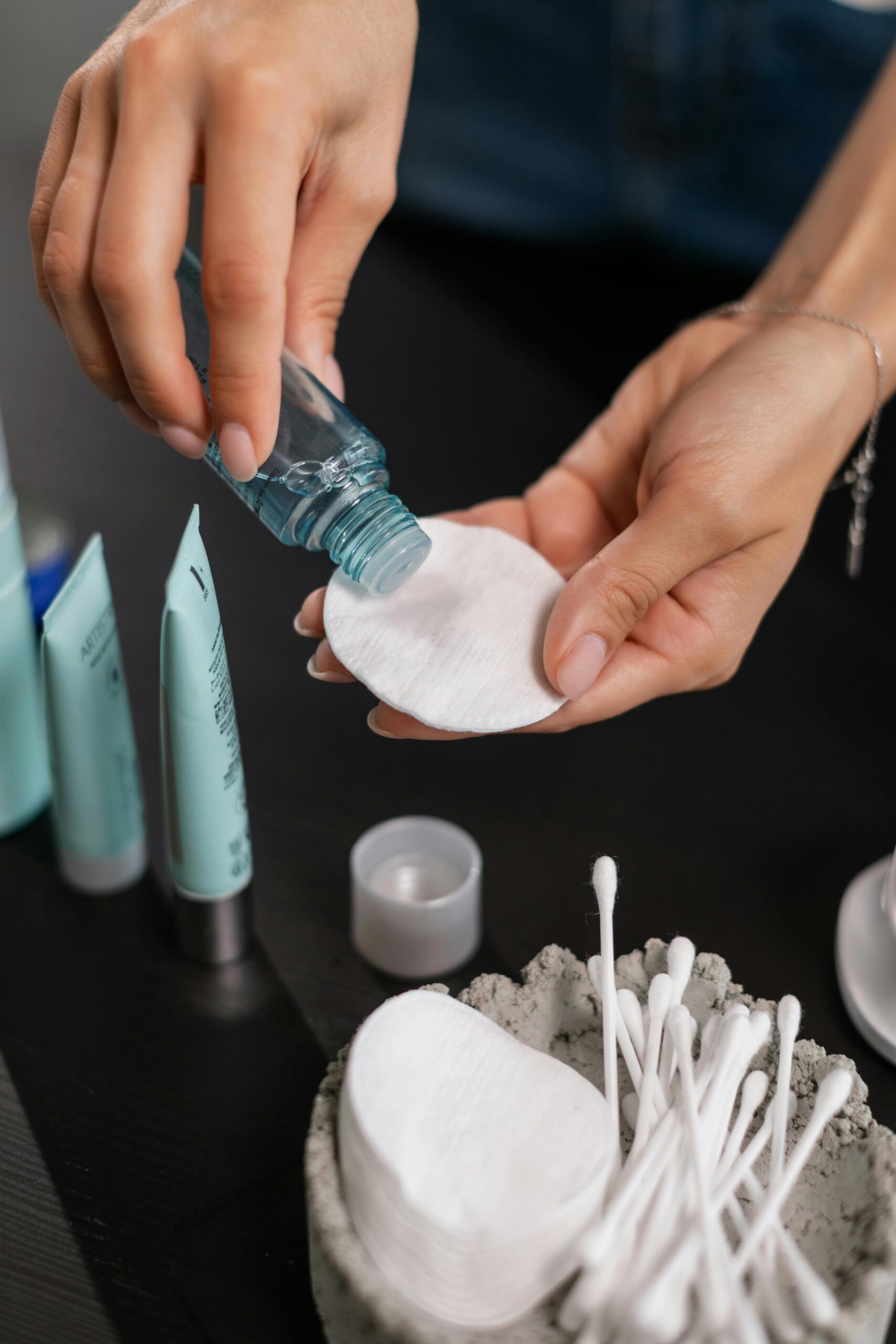
Hydrating toner or essence – your first water layer
This is where the routine begins to feel noticeably more comforting. A hydrating toner or essence can help reintroduce water into the skin and prepare it for the next layer, which is especially useful when the air around you is already dry.
It gives dry skin that first soft layer of hydration, which can make serums and moisturizers feel more balanced instead of heavy or oddly flat on the skin.
Ingredients like glycerin, panthenol, hyaluronic acid, rice extracts, or other soothing humectants that help the skin feel less tight and more flexible.
This step often shows up in Korean skincare in dry climates for a reason – multiple lighter hydrating layers can feel more breathable than relying on one very heavy product too early.
- Laneige Cream Skin Toner – A cream-toner style layer that feels especially nice when your routine needs more comfort without jumping straight to a thick cream.
- Isntree Hyaluronic Acid Toner – A classic hydrating option that fits well when you want a more traditional toner step before serum.
- Pyunkang Yul Essence Toner – Good when you want something simple, cushiony, and easy to layer without a sticky finish.
Apply this kind of layer onto skin that is still slightly damp if possible. That tends to help the step feel more useful instead of just decorative.
For more on this category, see best hydrating toner for dry skin in low humidity or why climate changes how toner works.
Hydrating serum – draw water into the skin
Once the first hydrating layer is in place, this is where you add a more concentrated step. A hydrating serum usually focuses on humectants that pull water toward the skin, which is why it makes sense before moisturizer rather than after.
Helps boost hydration and makes the skin feel plumper, less tight, and more receptive to the cream you apply afterward.
Hyaluronic acid, glycerin, beta-glucan, panthenol, or similar ingredients that support hydration without making the routine feel too active or complicated.
- The Ordinary Hyaluronic Acid 2% + B5 – A straightforward option when you want a dedicated humectant step that is easy to recognize and compare.
- Torriden Dive-In Hyaluronic Acid Serum – A good fit for people who like lightweight hydration that still feels noticeably cushioning.
- Vichy Minéral 89 – Works well when you want a minimalist-feeling hydrating serum that layers cleanly under moisturizer.
This step tends to work best when it goes onto slightly damp skin and is followed fairly soon by a cream. On its own, a hydrating serum may not be enough to keep water in the skin for very long, especially in a dry indoor environment.
💡 Quick Pro Tip: If a hydrating serum seems to make your skin feel oddly tight later on, the issue is not always the serum itself – it may be that you need a better sealing step afterward. Pairing that serum with a more barrier-supportive moisturizer is often what makes the difference.
For more help choosing this step, see hydrating serums that work in low humidity or why hyaluronic acid can fail in dry climates.
Treatment serum – optional, and better when kept simple
This is the point where a lot of routines become overcrowded. If your skin is dry, it usually helps to keep the treatment step calm and focused instead of layering several active products at once.
Add this step when you have a clear reason for it – for example redness, barrier support, or a specific concern that is not already addressed by your hydrating layers.
Too many active ingredients in one routine, especially when your skin already feels reactive, flaky, or easily overstimulated.
- Beauty of Joseon Green Tea + Panthenol Serum – A gentler kind of treatment step when you want something calming rather than overly aggressive.
Heads-up: If your skin barrier already feels fragile, this is often the easiest step to pause temporarily. A simpler routine with fewer treatment layers can sometimes feel better than trying to fix dryness while still pushing actives too hard.
If you are ever unsure whether you even need a treatment serum, that is usually a sign to simplify first. Dry skin often responds better to consistency than to constant product rotation.
Moisturizer – support the barrier and reduce water loss
A moisturizer is the step that helps hold the routine together. After your hydrating layers go on, this is what helps reduce water loss and make the earlier steps feel more durable throughout the day or overnight.
Supports the skin barrier, softens roughness, and helps hydration last longer instead of fading quickly once the air around you starts pulling moisture away.
Ceramides, cholesterol, fatty acids, squalane, and a texture that feels protective enough for your environment without becoming heavy in the wrong way.
- Illiyoon Ceramide Ato Concentrate Cream – A strong option when your skin needs a more protective, barrier-focused finish.
- Dr. Jart+ Ceramidin Cream – A richer cream that fits well when your skin tends to feel depleted or dry quickly in cooler weather.
- CeraVe Moisturizing Cream – A dependable classic for barrier support when you want something straightforward and widely recognized.
Products like La Roche-Posay Toleriane Double Repair Face Moisturizer are also often used in this part of a routine because they focus on barrier support without making the step feel overly complicated.
If your moisturizer still seems underwhelming, it may not be the cream itself. It may be that the earlier hydrating layers are not being applied in the most supportive way for dry skin.
For a closer look at this, see why your moisturizer might not be working and best barrier repair creams for dry skin.
Face oil or occlusive – optional, but often very helpful
This step is not always necessary, but it can make a real difference when your skin still feels dry even after a serum and moisturizer. In dry climates, a final sealing layer can help reduce how quickly hydration escapes from the skin overnight.
Useful when your skin feels dry by evening, when indoor heat is running constantly, or when your barrier feels more vulnerable than usual.
It belongs after moisturizer, not before. Oils and occlusives can slow down how well lighter layers settle if you put them on too early.
- The Ordinary 100% Plant Derived Squalane – A simple option if you want a light sealing step without turning the routine into something too rich.
- Biossance Squalane + Vitamin C Rose Oil – Better when you want an oil texture that feels more elevated and cushioning at the end of the routine.
- Vaseline – A classic occlusive choice for people who need a stronger seal, especially around the driest areas of the face.
If you want more clarity on this step, see occlusives vs humectants or does slugging with Vaseline actually work.
Sunscreen – the final morning step
Sunscreen should always be the last step in your morning routine. Even if your skin is dry, uncomfortable, or reactive, daily sun protection still matters because barrier-stressed skin usually benefits from more consistency, not less protection.
Hydrating or lotion-like textures, non-matte finishes, and formulas that sit comfortably over moisturizer without making the skin feel tight later on.
Putting sunscreen on earlier in the routine can interfere with how the rest of the layers perform. It works best when it stays undisturbed as the last morning layer.
- Beauty of Joseon Relief Sun SPF 50 – A popular choice when you want a sunscreen that feels more like a comfortable skincare step than a dry finishing layer.
- Isntree Hyaluronic Acid Watery Sun Gel – A good fit if you prefer sunscreen textures that feel light but still hydrating.
- Skin1004 Hyalu-Cica Water-Fit Sun Serum SPF50+ – Helpful when you want a soft, serum-like finish that layers smoothly over a barrier-focused routine.
For more on this category, see winter sunscreen for dry skin.
How to layer skincare correctly for dry skin
Once the order is clear, technique becomes the next important piece. The difference between a routine that feels smooth and one that pills, sits oddly, or fades too quickly often comes down to how each layer is applied.
📍 Simple layering flow
Damp skin
↓
Toner
↓
Serum
↓
Moisturizer
↓
Oil or occlusive
Hydrating layers usually feel more effective when there is still some water on the skin. That does not mean soaking wet skin – just lightly damp is enough.
Thin, even layers tend to perform better than applying too much product at once. Heavier application can sometimes lead to pilling or a routine that never fully settles.
You do not need long wait times, but it helps to let each layer settle briefly before moving on. That small pause can make the routine feel much smoother overall.
You know when products start rolling off the skin or feel like they are just sitting there instead of blending in? That is often a layering issue, not necessarily a bad product. For a deeper technique breakdown, see layering skincare without pilling.
How to adjust the skincare order for dry climates
Dry environments change how hydration behaves on the skin. A routine that feels perfectly fine in a more humid setting can feel noticeably less effective once indoor heating, cold air, or very low humidity start pulling moisture away more quickly.
A basic cleanser, one hydrating layer, moisturizer, and sunscreen may feel like enough for much of the year.
Hydration usually needs more support – not necessarily more products, but better sequencing and a more intentional sealing step.
This is also why K-beauty for dry skin often makes sense in low humidity – it tends to emphasize layered hydration followed by a cream that helps everything stay in place. And if your home air is consistently dry, supportive environmental steps matter too. A cool-mist option like the Dreo Smart Cool-Mist 4 L can help support your routine by making the air around your skin less dehydrating.
Common mistakes in skincare order for dry skin
Even a thoughtful routine can feel less effective when a few small habits keep working against it. These are some of the most common mistakes that make dry skin routines feel inconsistent.
Hydrating layers usually work best when some moisture is already present. Very dry skin can make those products feel less effective than expected.
An oil step can be helpful, but it belongs later in the routine. Otherwise it may slow down how well water-based layers settle.
A serum can add hydration, but it usually does not replace the role of a moisturizer. Dry skin often needs that barrier-supportive middle step.
More products do not always lead to better skin. A simpler routine that layers well is usually easier for dry skin to tolerate and easier to repeat consistently.
If you are already noticing flaking, tightness, or rough texture, see flaky skin causes and fixes or skin barrier repair in a dry climate.
Morning vs evening – a designed routine flow for dry skin
This is the hero section of the post because it ties everything together in a way that feels practical, not theoretical. Morning and evening routines do not need to be identical – they just need to support what your skin is dealing with at that time of day.
For a fuller version of that nighttime approach, see night routine for dry skin or simple skincare routine for dry skin.
If your skin still feels dry after following this order
If your routine is in the right order but your skin still feels dry, the problem may be bigger than sequencing alone. Sometimes the barrier is already stressed, sometimes the products are not the best match for your environment, and sometimes the surrounding air is working against you more than you realize.
That does not mean the order is unimportant – it just means the order works best when the products themselves also make sense for dry-climate skin. When in doubt, it usually helps to simplify, reduce irritation, and focus on barrier support before adding more treatment steps.
Simple recap – skincare order for dry skin
Saveable routine
Frequently asked questions
What is the correct skincare order for dry skin?
A generally effective skincare order for dry skin is cleanser, toner or essence, hydrating serum, treatment serum if needed, moisturizer, oil or occlusive if needed, then sunscreen in the morning. That order helps lighter hydration go on first and richer barrier-supporting layers come later. It is not about having the longest routine possible – it is about giving each step the right place to work.
Do I need toner for dry skin?
No, toner is not absolutely required, but it can be genuinely helpful for dry skin. A hydrating toner can add a first layer of water back into the skin and make the rest of the routine feel more comfortable. This is especially useful in dry climates where hydration tends to disappear faster.
Should oil go before or after moisturizer?
Oil usually makes more sense after moisturizer. It works better as a final sealing step than as something placed earlier in the routine. If you put it on too soon, it may slow down how well lighter water-based products settle on the skin.
Can I skip moisturizer if I use a serum?
In most dry skin routines, moisturizer still matters even when you are using a hydrating serum. The serum can bring water to the skin, but the moisturizer helps reduce how quickly that hydration is lost. If you skip that step, the routine may feel good at first but fade too quickly later on.
How long should I wait between skincare steps?
You usually do not need long wait times between steps. A few seconds is often enough for each layer to settle before you move on to the next one. The main goal is to avoid piling everything on too quickly if products are still very wet or slippery on the surface.
Why does my skin still feel dry even when I follow the right order?
The order helps, but it is not the only factor. Your skin can still feel dry if the products do not match your environment, if your barrier is already stressed, or if indoor air is very dehydrating. In that case, a more barrier-focused moisturizer, fewer irritating steps, and better indoor humidity may help more than adding extra layers.
When the order makes sense, dry skin routines stop feeling random. A calm sequence can do more for comfort and consistency than adding another product ever could.
Keep Reading: Layering skincare without pilling · Hydrating serums for low humidity · Why moisturizer might not be working · Barrier repair creams for dry skin
📚 Sources & References
- American Academy of Dermatology – Dry skin care
- Cleveland Clinic – Dry skin
- Journal of Clinical and Aesthetic Dermatology – The role of moisturizers in addressing various kinds of dermatitis
- Dermatologic Therapy – Transepidermal water loss and skin barrier function
- International Journal of Cosmetic Science – Humectants, emollients, and occlusives in moisturizers
- National Institute of Arthritis and Musculoskeletal and Skin Diseases – Caring for your skin
You Might Also Like
Do Humidifiers Help With Dry Skin? What Science & Derms Say
Why Your Moisturizer Isn’t Working for Dry Skin – The Real Fix

Stop Doing These 10 Things Before Bed If You Want Better Skin

Toner 101: Why Your Climate Changes Everything (and How to Pick the Right One)?
Houseplants That Increase Humidity: Easy Ways to Make Indoor Air Softer and Pet-Safe

Best Overnight Masks for Dry Skin That Actually Work by Morning

Skin Feels Tight After Cleansing? Why It Happens + Fix

Why Your Skincare Suddenly Stops Working – And How to Fix It
Flaky Skin on Face: Why It Happens and the Real Fix

Best Moisturizers for Extremely Dry Winter Skin (Canada)