
Glo Guide
Which Serum Do I Need?
Skincare made simple – see which serums actually suit your skin type.
New to dry-air skincare? Start with Skincare in Dry Climates, then use this guide to match your serum to your skin type and climate.
Disclaimer: I’m not a dermatologist or medical professional – this post is based on research and personal experience. It may contain affiliate links that earn a small commission at no extra cost to you. The information here is for general informational purposes only and should not be taken as medical advice. Always seek the guidance of a qualified healthcare professional before adding new supplements, tonics, or making changes to your diet, skincare, or lifestyle routine.
💡 Quick Pro Tip: If your skin feels tight in heated indoor air, apply hydrating toner, then serum while skin is still slightly damp – it boosts slip and comfort.
Heads-up: If moisturizer stings or your barrier feels tight, pause new actives and reset with a gentle cleanser, humectant toner, and ceramide cream for 7–10 days.
Ingredient goals – quick compare
Not sure what your skin really needs? These ingredient matchups show which actives fit your goals best.
| Goal | Best picks |
|---|---|
| Hydration | Hyaluronic acid · Glycerin · Panthenol |
| Oil balance | Niacinamide · Zinc · Green tea |
| Glow | Vitamin C · Licorice root · Arbutin |
| Texture | Retinoid · Peptides · PHA |
| Calm | Centella · Allantoin · Ceramides |
Recommended Serums by Skin Type
Choose your skin type below to see the best actives and serum picks for you – plus quick tips to help each one layer smoothly in your routine.
🫧Oily
- Best actives: hyaluronic acid for water-weight hydration; niacinamide to balance look of oil; light ceramides to support barrier.
- Avoid: heavy occlusive oils that add shine.
- Routine tip: gel textures and SPF feel weightless.
- Round Lab Birch Juice Serum – layers clean under SPF.
- Beauty of Joseon Calming Serum (green tea + panthenol) – light and non-greasy.
- The Ordinary Niacinamide 10% + Zinc – try lower % first if reactive.
🌵Dry
- Best actives: glycerin + hyaluronic acid under ceramides; vitamin C for glow.
- Avoid: strong acids in deep winter.
- Routine tip: mist then serum on slightly damp skin.
- Aestura AtoBarrier 365 Serum – ceramide-rich comfort.
- Laneige Water Bank Blue Hyaluronic Serum – water-weight bounce.
🌱Sensitive
- Best actives: centella, panthenol, allantoin; avoid fragrance.
- Avoid: alcohol-heavy formulas.
- Routine tip: patch test on the jawline for 2–3 nights first.
- Skin1004 Centella Ampoule – single-focus calm.
- Etude SoonJung 10-Free Moist Emulsion – simple barrier support.
🎯Acne-prone
- Best actives: salicylic acid, retinol, niacinamide (buffer with hydration).
- Avoid: stacking acids and retinoids the same night.
- COSRX BHA Blackhead Power Liquid – gentle pore work.
- Adapalene gel (OTC) – follow label; add ceramides.
💧Dehydrated / Dull
- Best actives: hyaluronic acid + glycerin; vitamin C for brightness.
- Routine tip: run a humidifier to keep room ~40–45% RH. See Best Humidifiers.
- Vichy Mineral 89 – simple water-weight hydration.
- Melano CC Vitamin C – budget brightening; use SPF daily.
✨Aging / Mature
- Best actives: peptides for cushion; vitamin C for tone; retinoid at night.
- Routine tip: alternate retinoid nights with barrier-rich creams.
- RoC Retinol Correxion Night – classic entry retinol.
- Inkey List Collagen Peptide – simple peptide layer.
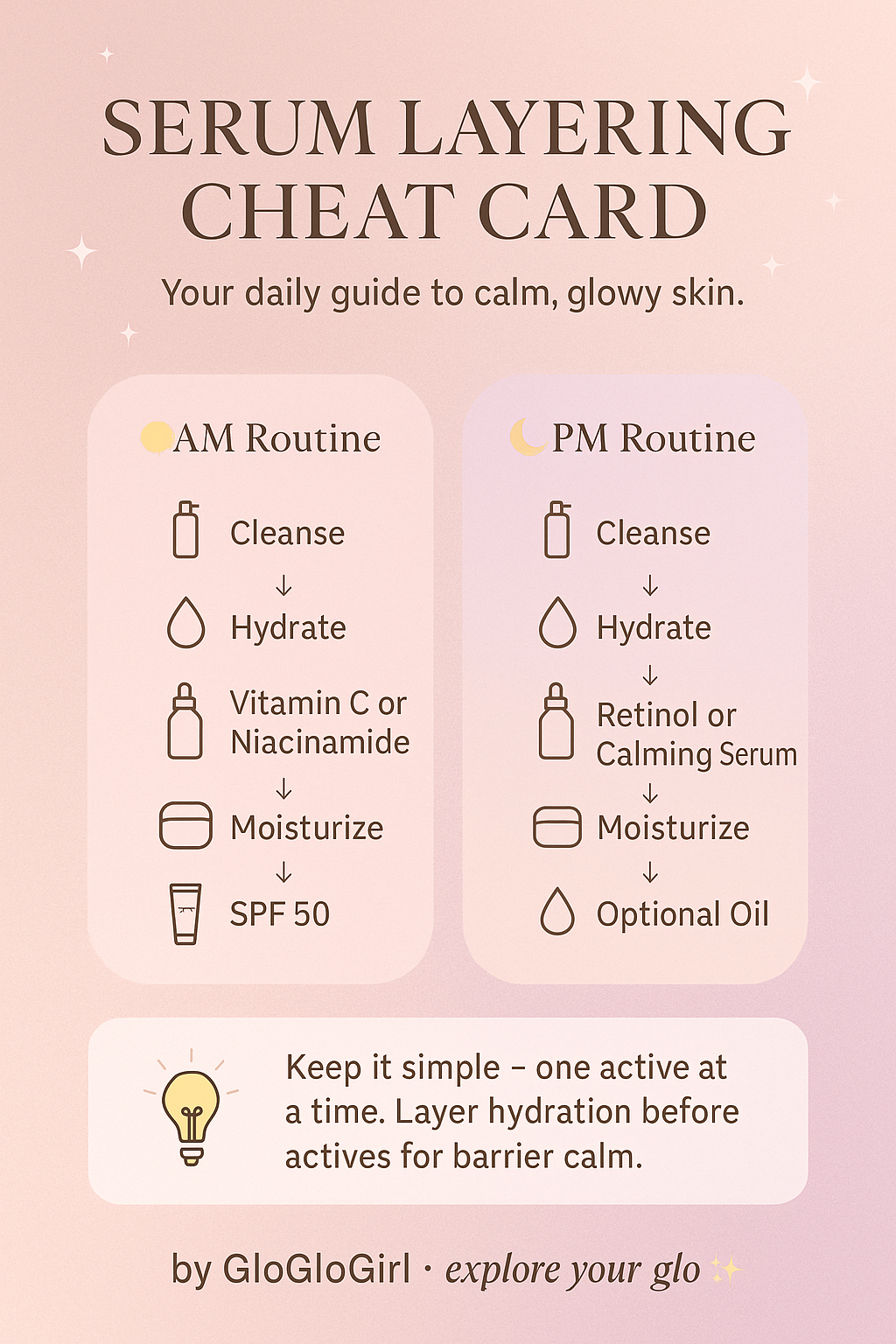
How to layer serums correctly
- Cleanse gently – low-foam gel or milk. See Gentle Winter Cleansers.
- Hydrate – toner or mist on slightly damp skin. See Toner 101.
- Active serum – pick one main concern per night.
- Moisturize – cream to seal; add a few drops of oil if needed.
- Daytime – finish with SPF 50.
FAQ
Can I layer multiple serums?
Yes – but keep it simple in dry air: one active + one hydrating serum is plenty. Avoid stacking acids with retinoids the same night.
Which goes first – hyaluronic acid or vitamin C?
Hydrators first, then vitamin C. Thin to thick is a good rule: watery humectants → vitamin C → moisturizer → SPF.
Can I mix niacinamide and vitamin C together?
Modern formulas play well together. If you’re sensitive, alternate AM/PM or different days.
How long should I wait between layers?
About 30–60 seconds or until the previous layer feels set. Retinoids can have a longer wait if you prefer.
When do serums expire after opening?
Most last 6–12 months after opening. Vitamin C (ascorbic acid) is the quickest to oxidize – cap tightly and store cool and dark.
What if everything stings suddenly?
That’s a barrier red flag. Stop actives, switch to gentle cleanser + humectant toner + ceramide cream for a week, then re-introduce slowly.
Keep Reading: Toner 101 – Why Your Climate Changes Everything · Skin Barrier Repair – How to Restore Balance in a Dry Climate · Safe Exfoliation in Low Humidity – How to Protect Your Skin · Best Humidifiers for Dry Skin – Cool-Mist Picks & Water Tips
📚 Sources & References
- American Academy of Dermatology – Should I apply skin care products in a certain order?
- American Academy of Dermatology – Dry skin, oily skin (dermatologist tips by skin type)
- National Library of Medicine (PMC) – Hyaluronic acid: A key molecule in skin aging
- National Library of Medicine (PubMed) – Nicotinic acid/niacinamide and the skin
You Might Also Like
Why Does My Skin Look Dull but Hydrated? What You’re Missing

Best Drugstore Products for Dry Skin That Actually Work
Hydration Mist for Dry Skin – Fix Midday Tightness
Safe Exfoliation in Low Humidity: How to Protect Your Skin in Dry Climates
Does Slugging with Vaseline Actually Work?
Do Nose Strips Actually Work – What They Really Do to Your Skin
Why Does My Moisturizer Burn? 5 Common Reasons
Occlusives vs Humectants Dry Climate – The Hydration Fix That Actually Lasts
Why Does My Skin Get Dry During the Day? What’s Actually Causing It

Spring Skincare Routine Dry Climate: How to Transition Without Damaging Your Skin Barrier